Your cart
Cart
items
Shopping cart



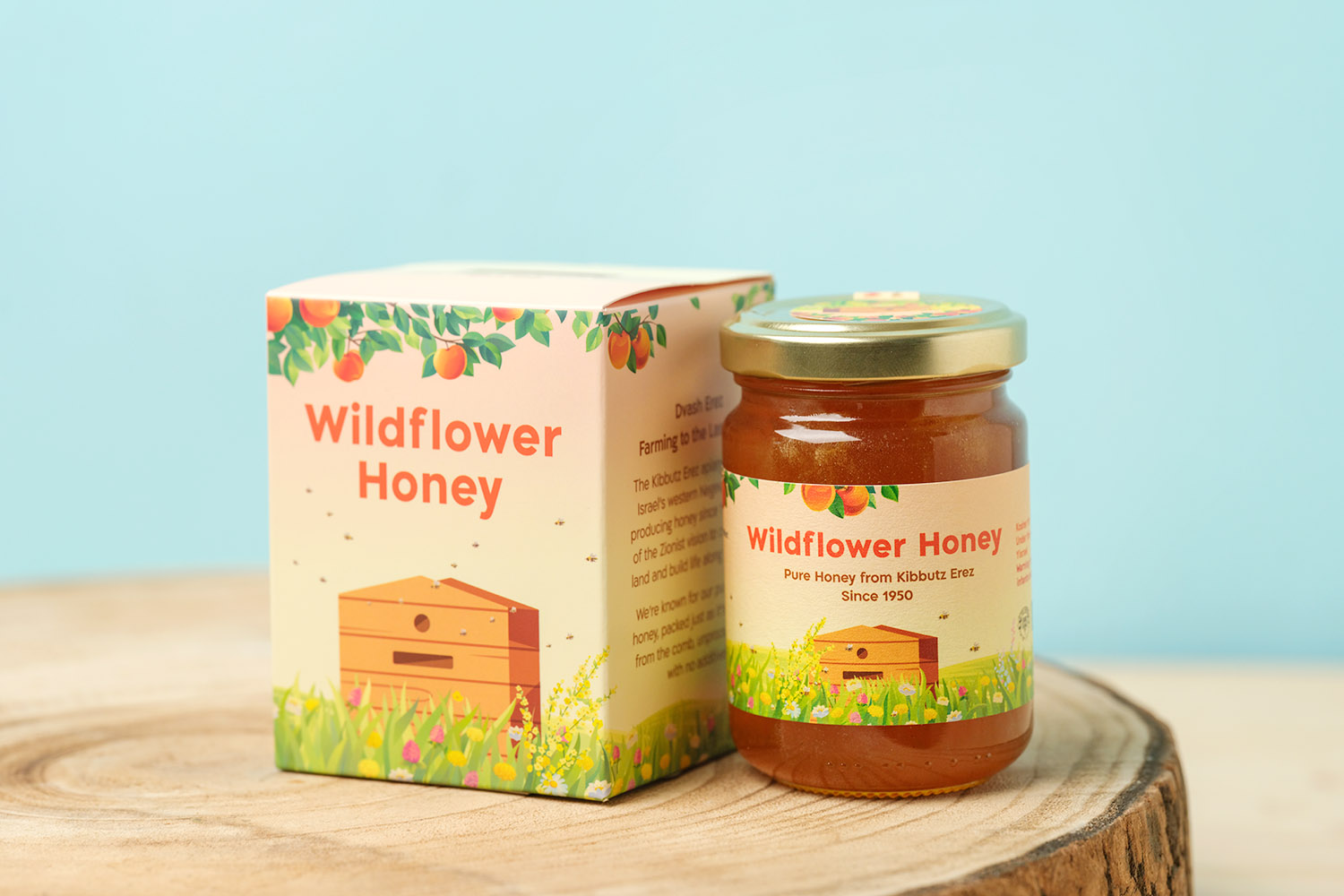
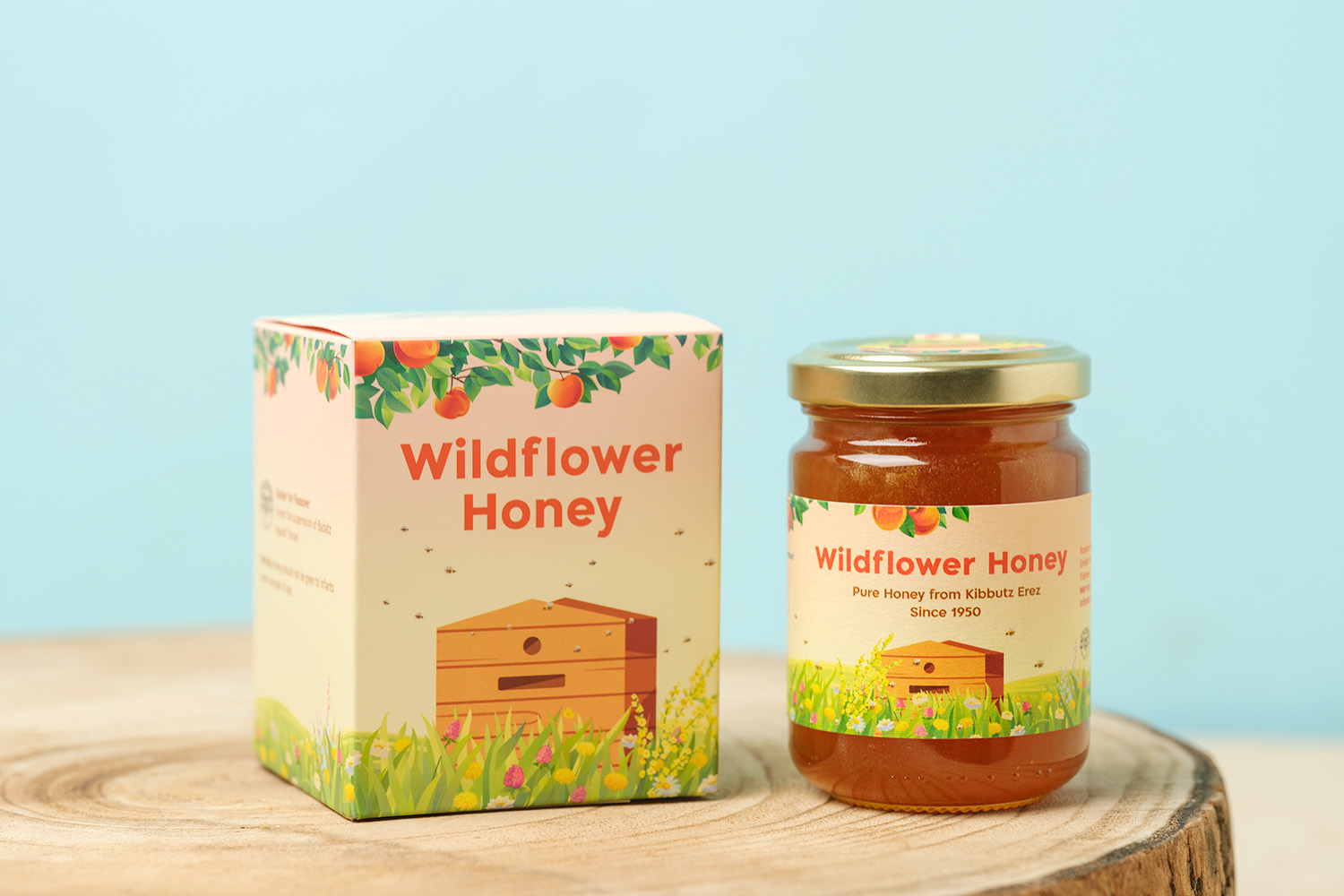
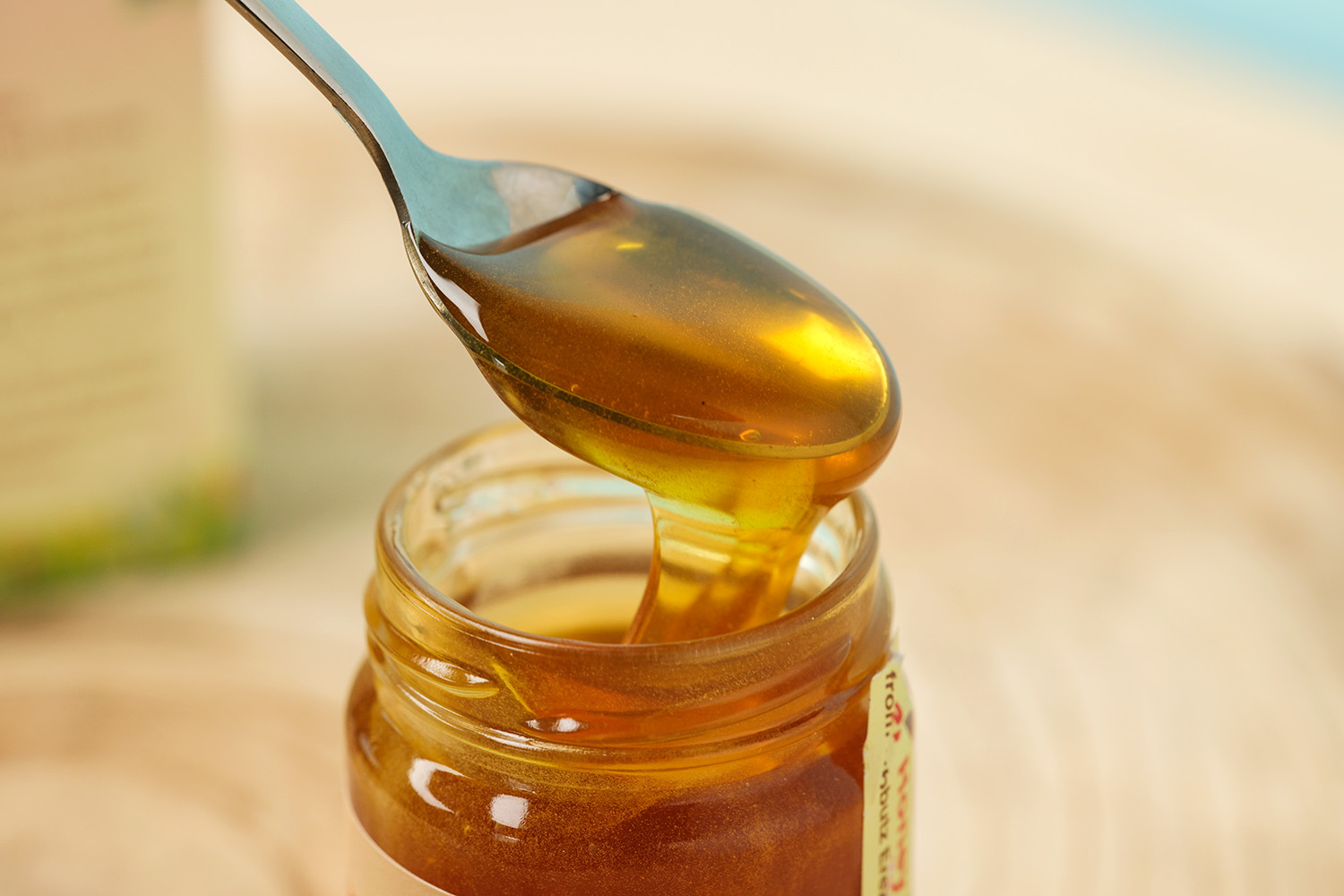
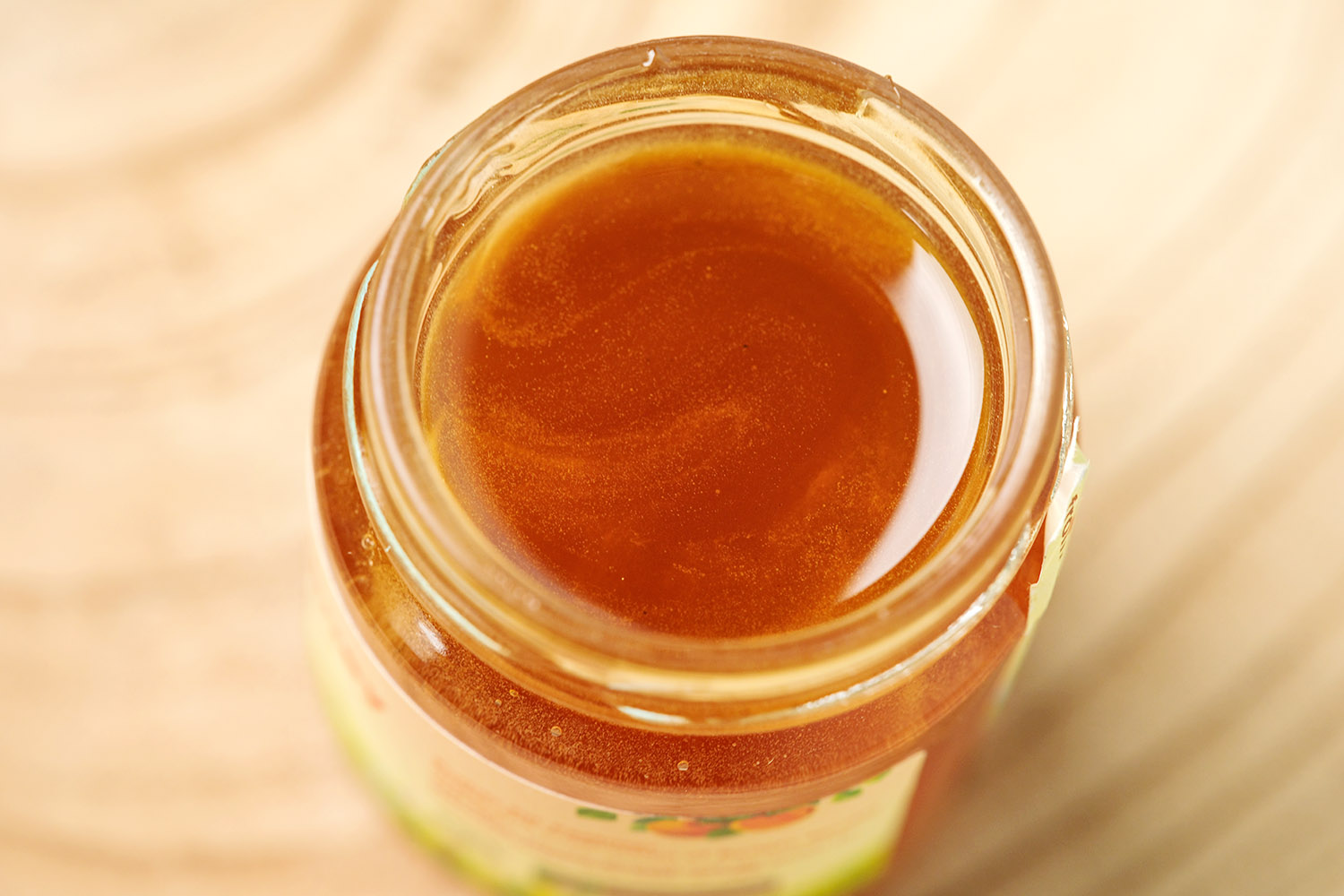
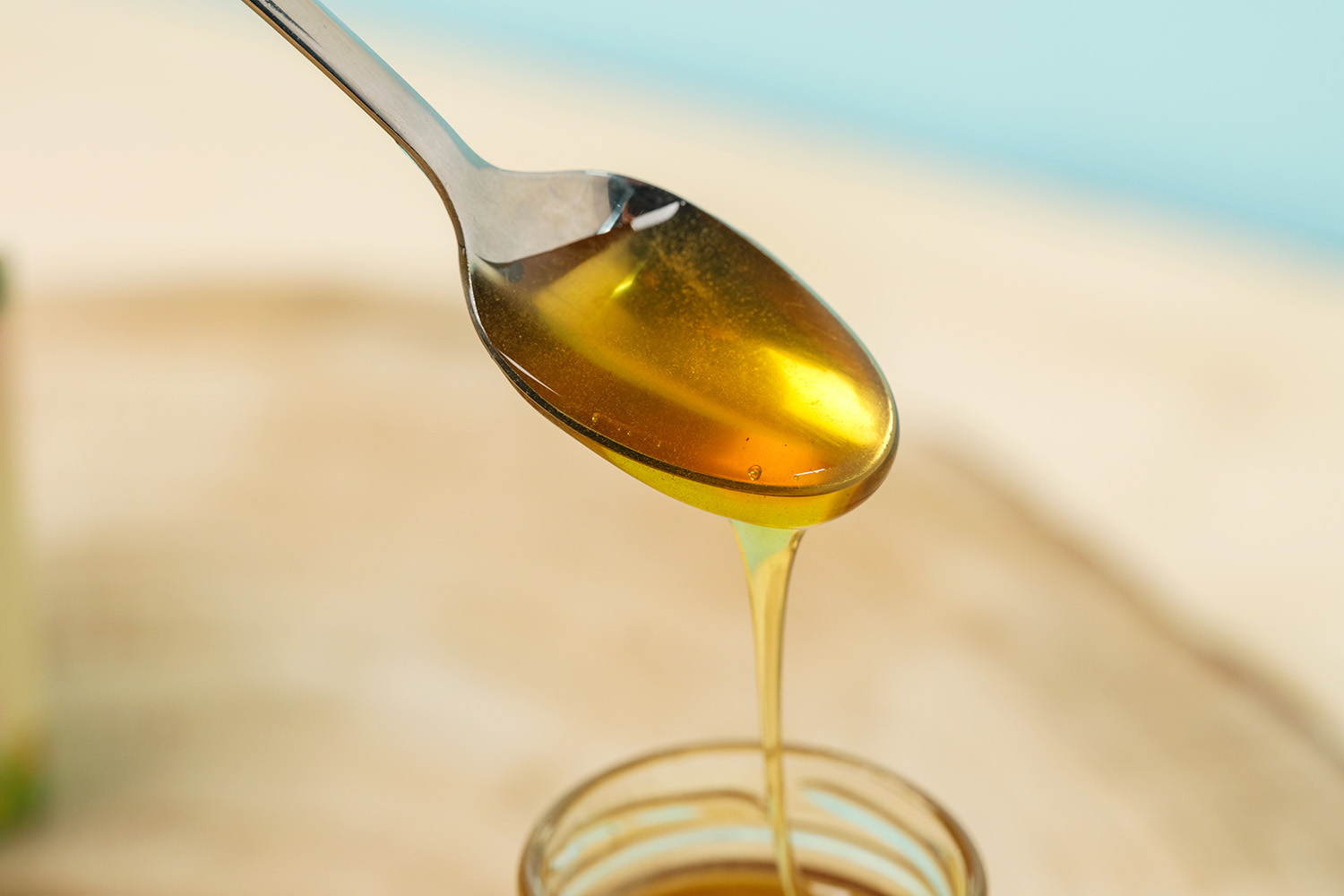
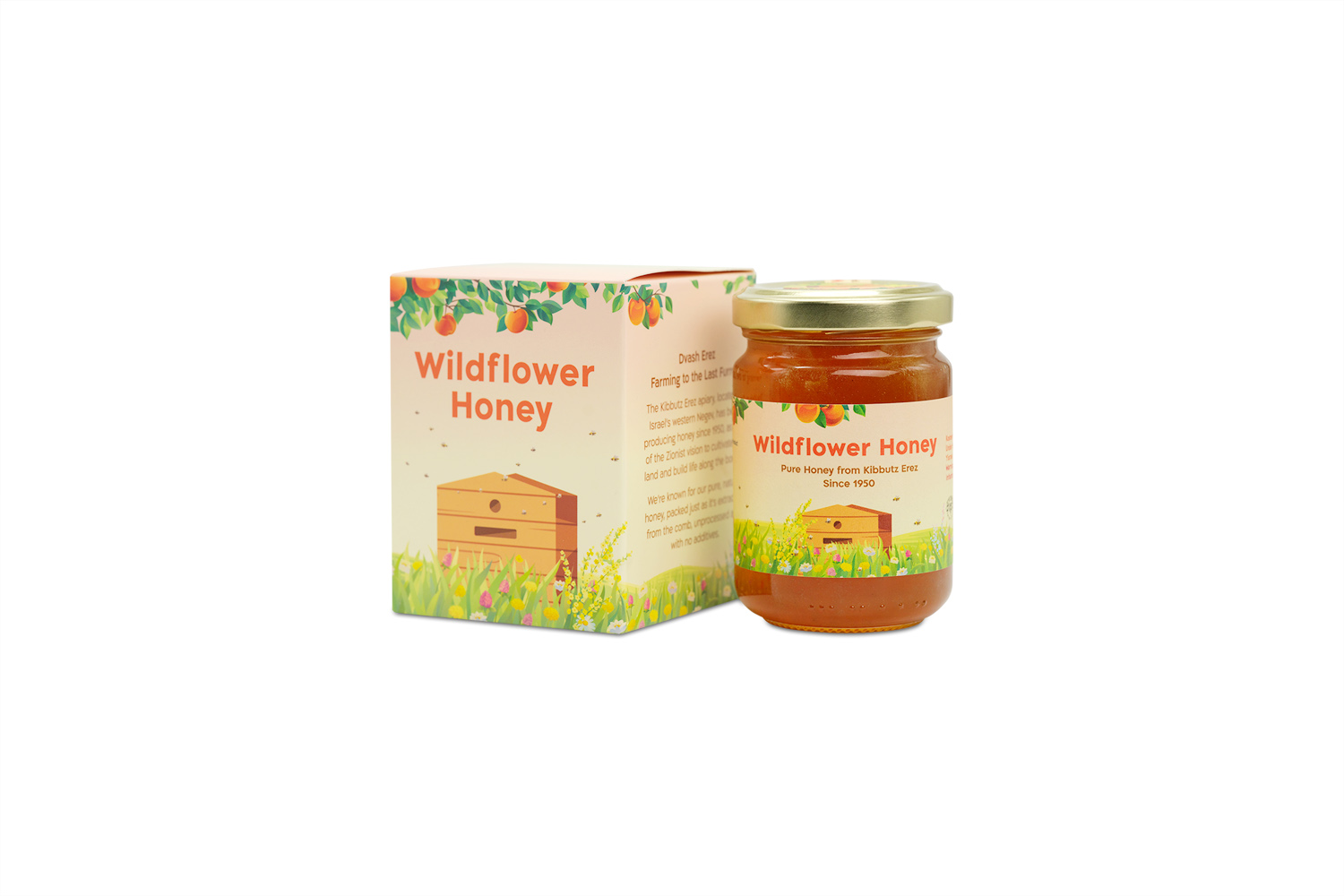
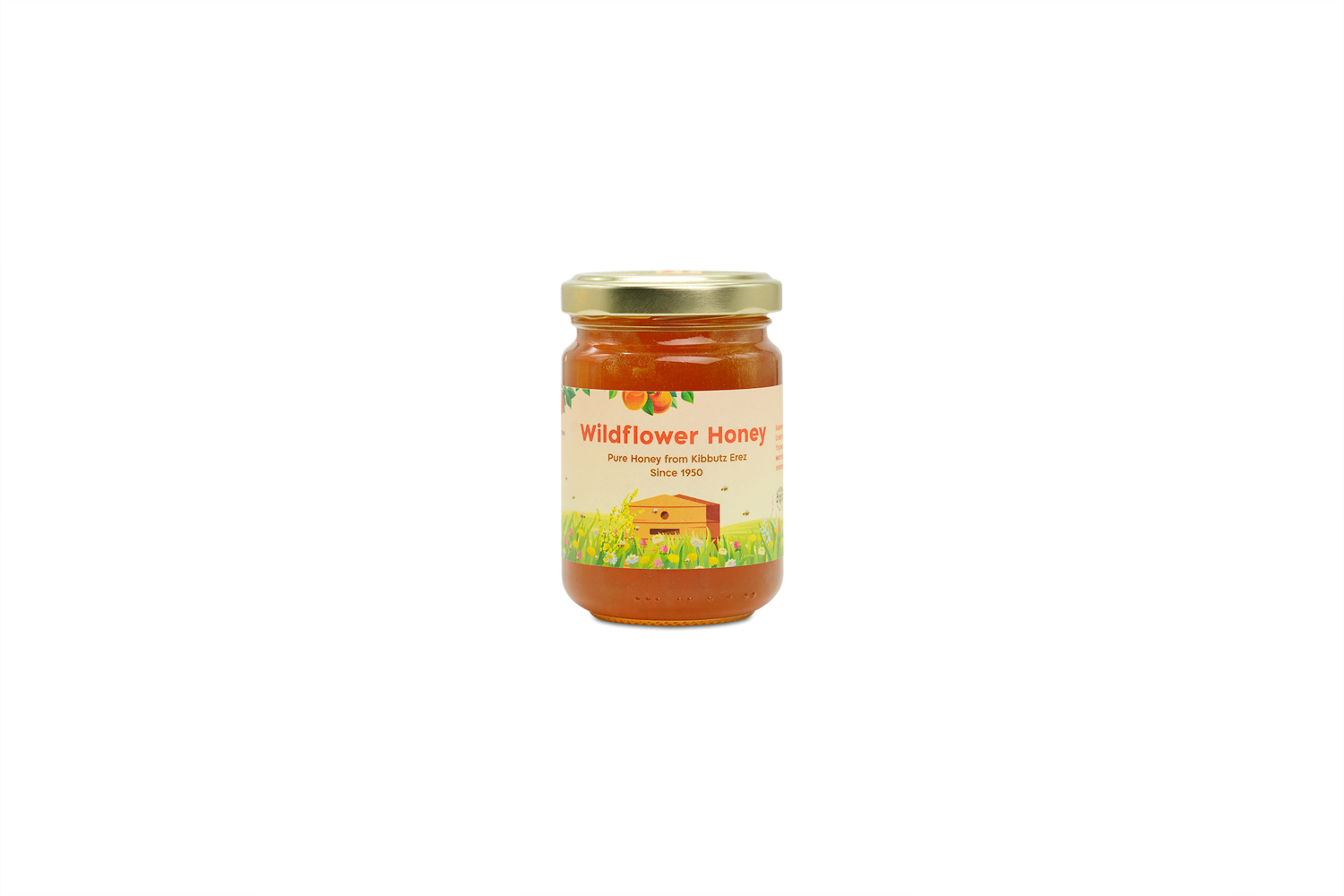
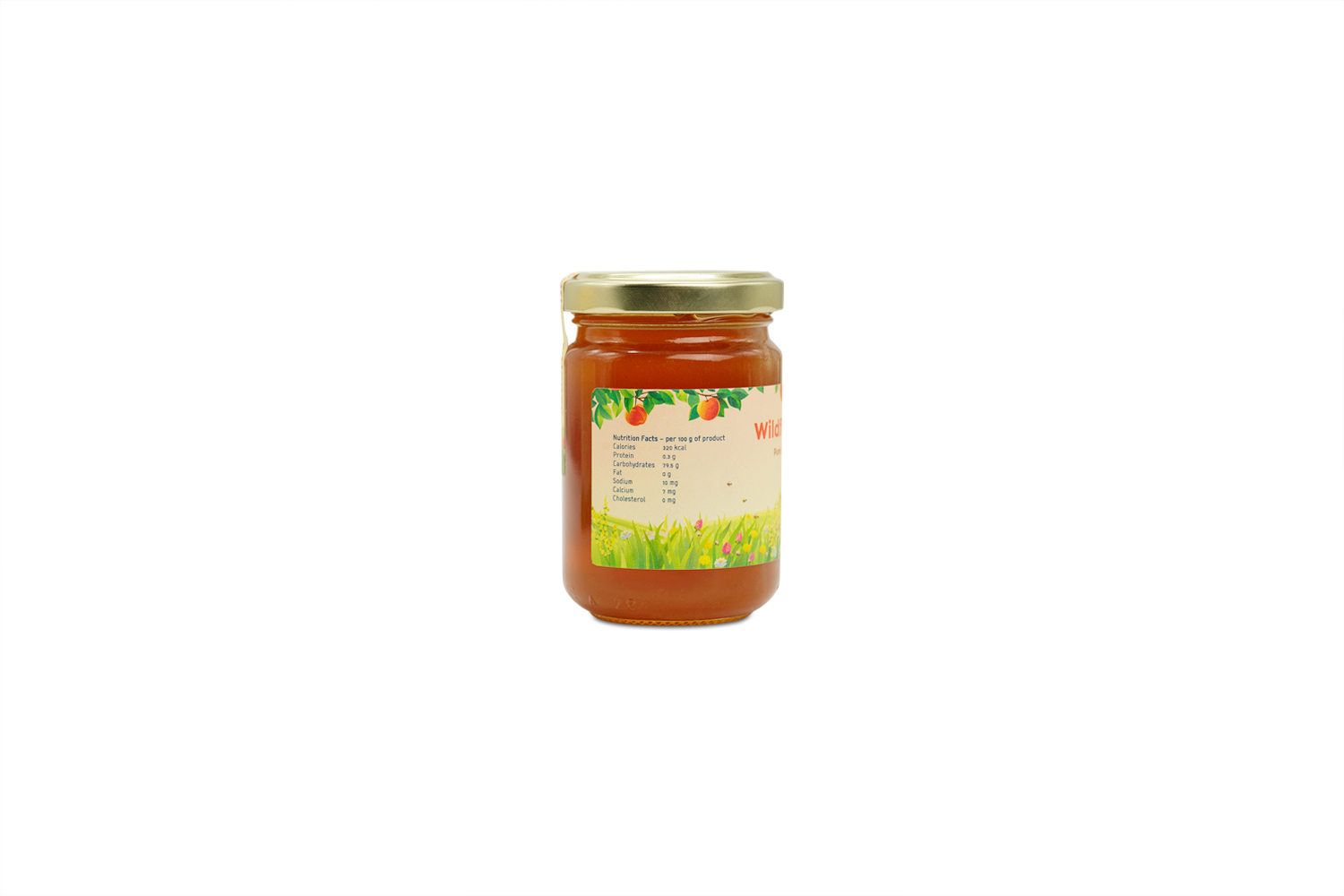
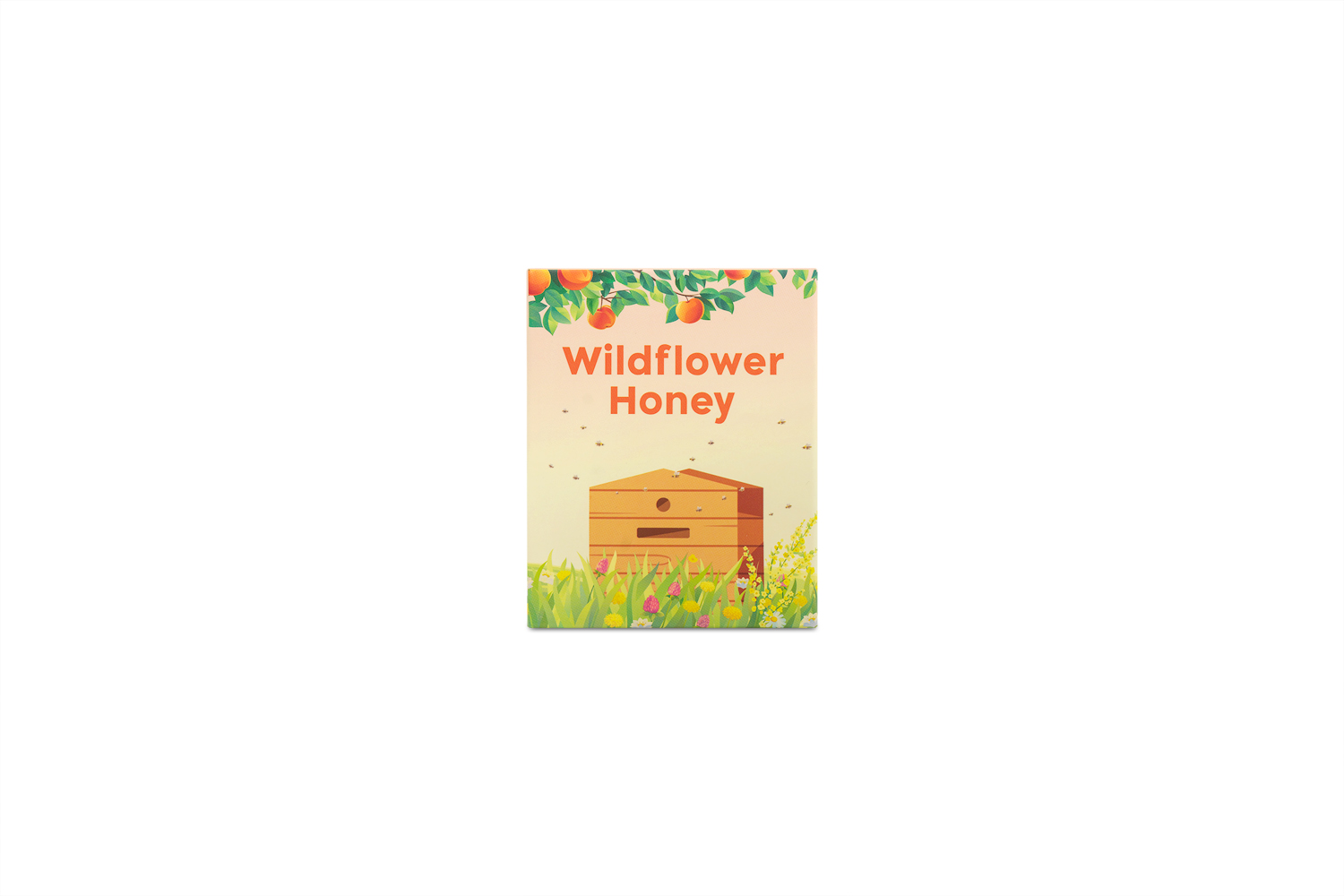
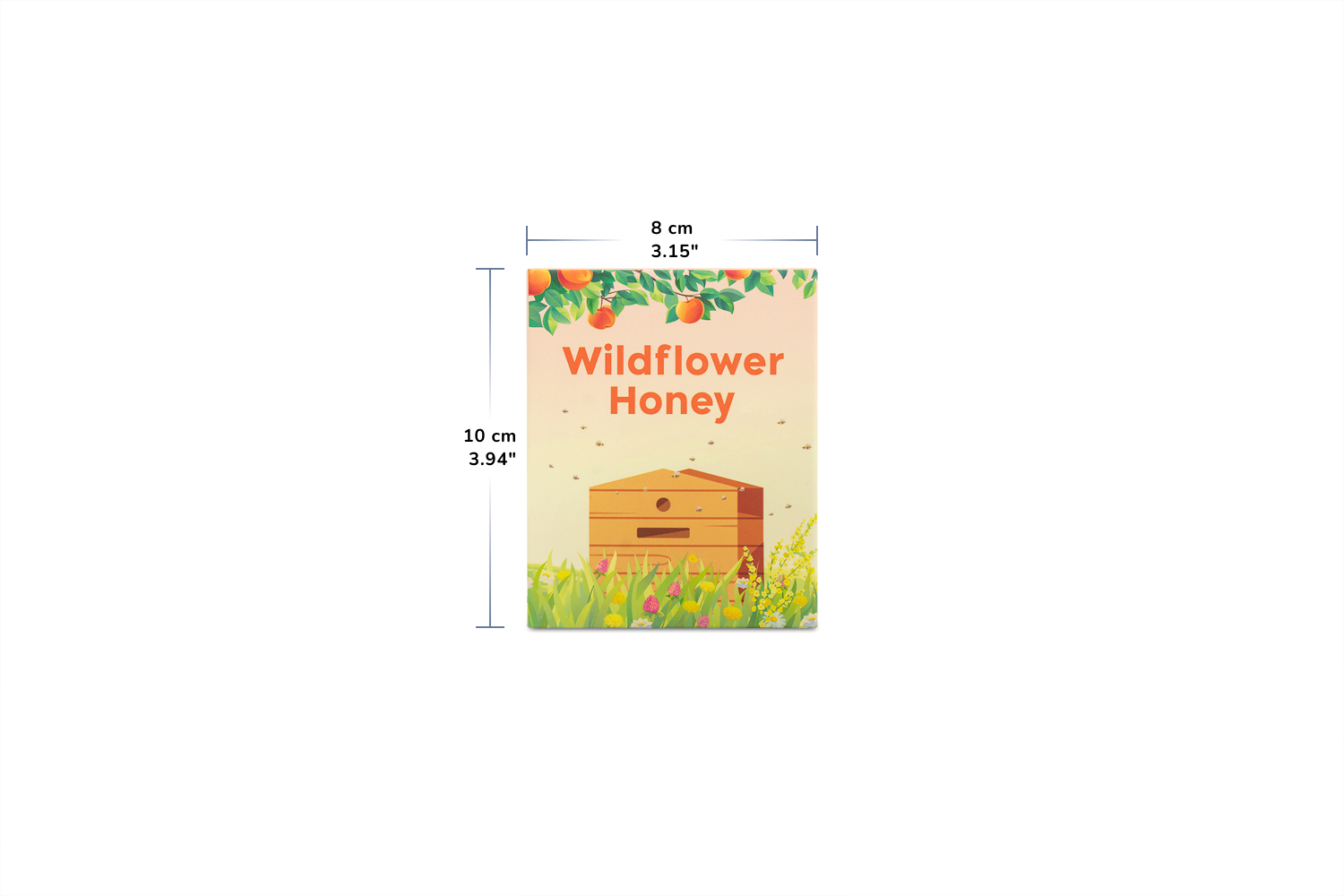

Produced in Israel’s western Negev near the Gaza border, this wildflower honey is drawn from hives placed among open fields and agricultural groves. In the jar, it appears deep amber and pours slowly, gathering weight on the spoon. The flavor develops in clear stages, beginning with floral sweetness, followed by citrus notes, and finishing with a deeper, grounded character that reflects the plants surrounding the hives.
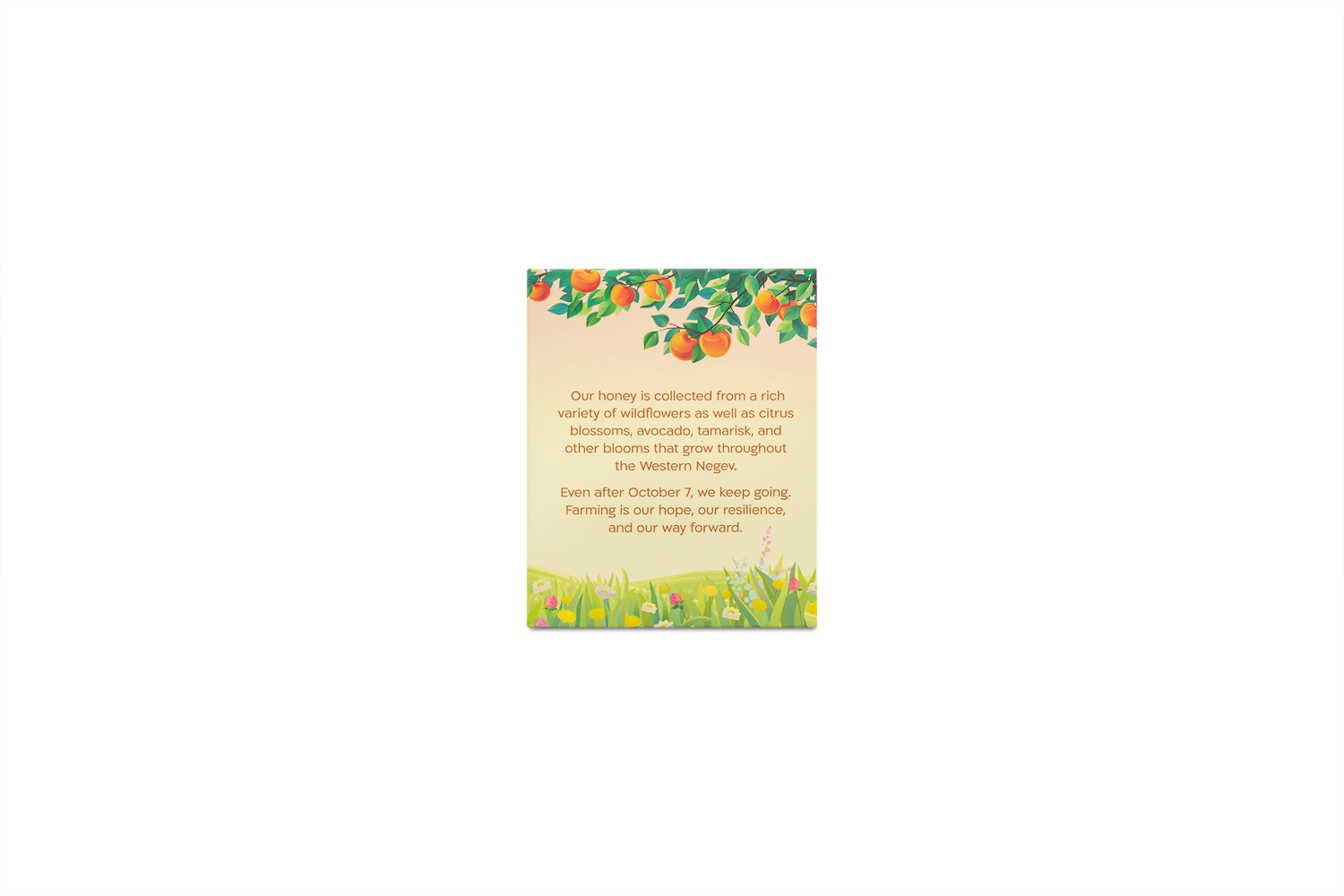
The honey is collected at Kibbutz Erez, where beekeeping has been part of daily agricultural work since 1950. Bees forage across citrus blossoms, avocado trees, tamarisk, and native wildflowers that grow in sandy soil under intense sun. Once extracted from the comb, the honey is packed without heating or additives, preserving its natural texture, color, and composition.
In a border community where farming continues under constant uncertainty, the beekeepers of Kibbutz Erez return to their hives season after season, including after October 7. This honey reflects food produced through continued presence and sustained agricultural labor in Israel’s southern region.
“A land of wheat and barley, of vines and fig trees and pomegranates; a land of olive oil and honey.” (Deuteronomy 8:8)
Ingredients: Pure wildflower honey
Nutritional Information (per 100 g / 3.5 oz)
Specifications
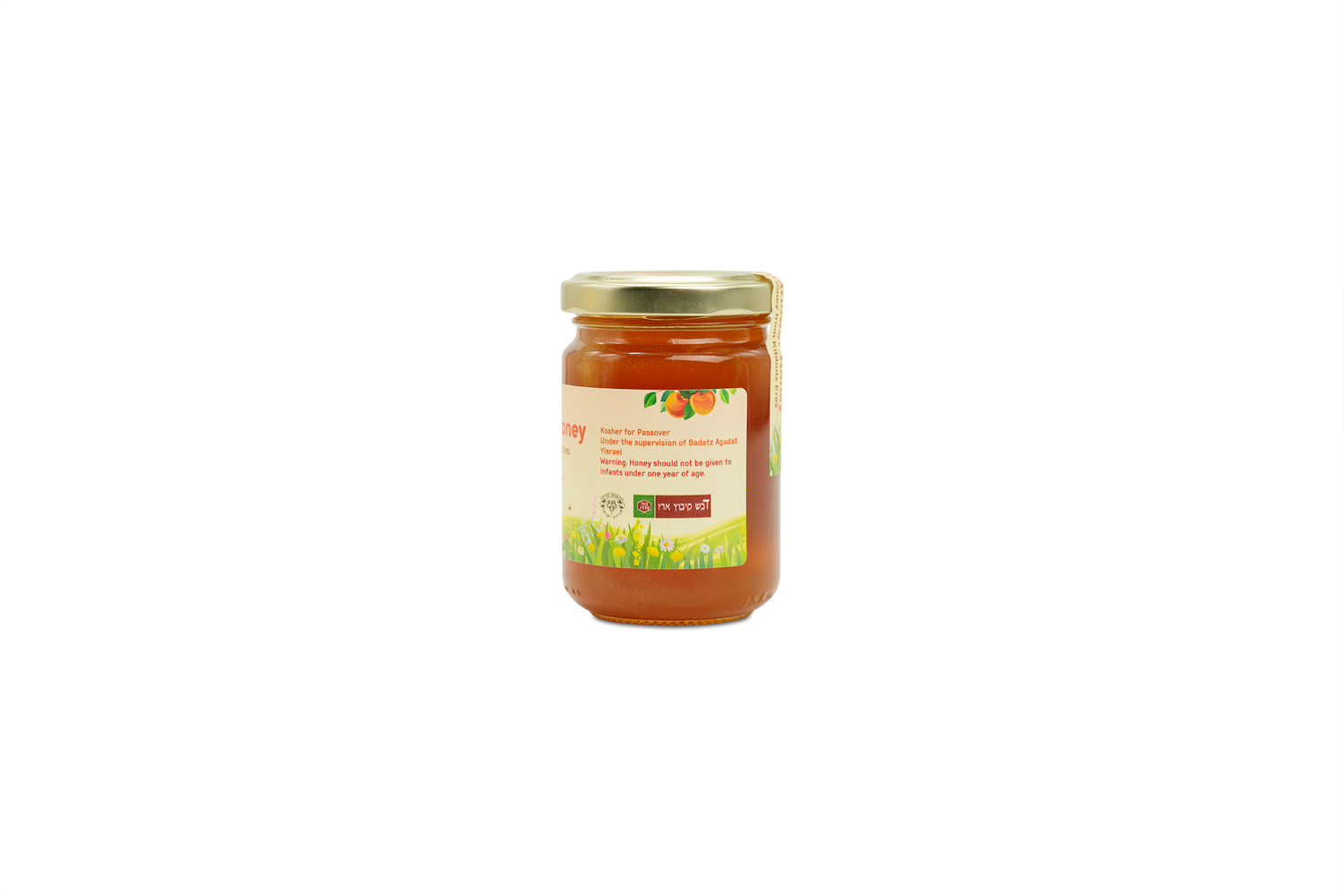
 Kosher
|
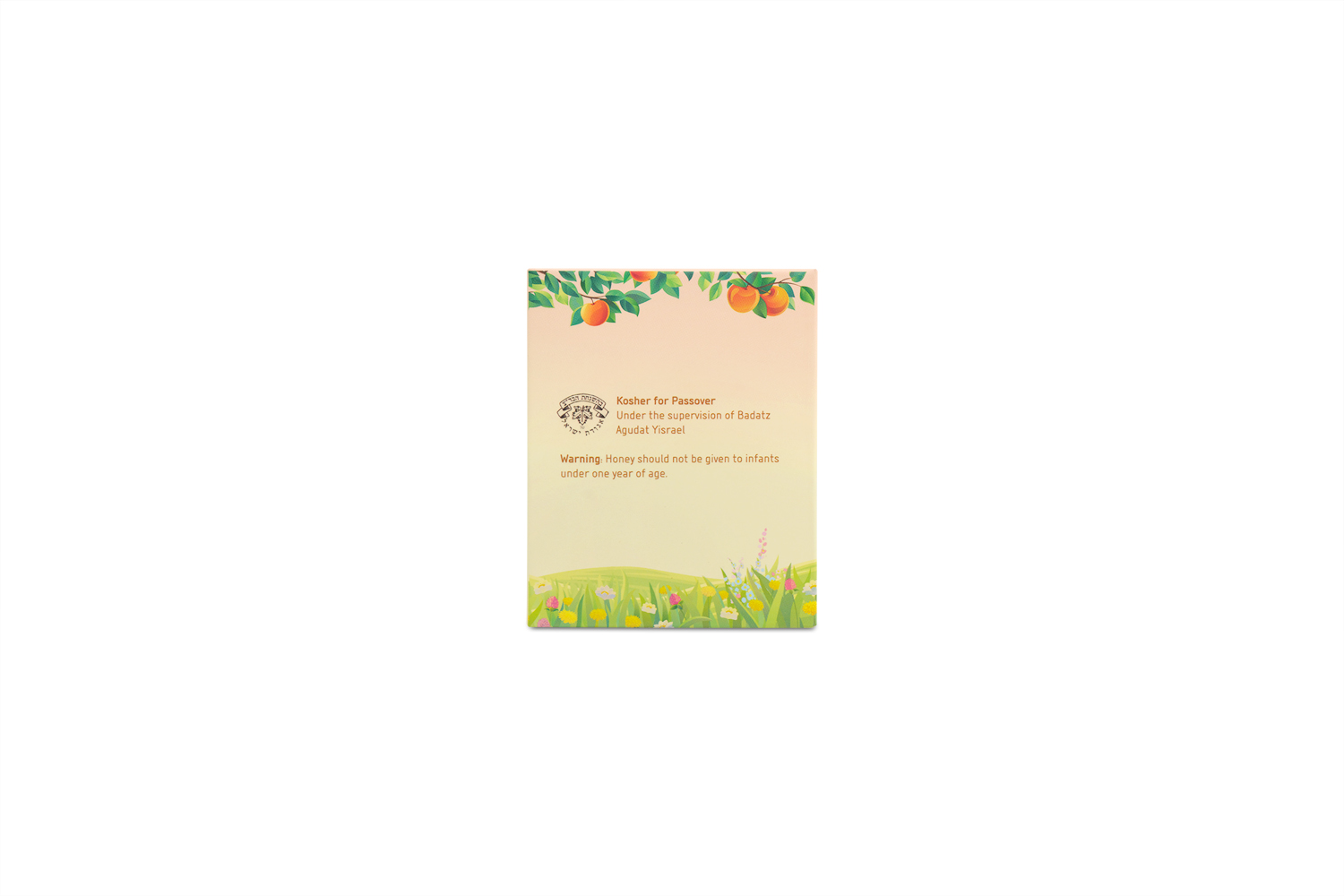
 Kosher for Passover
|
 Organic
|
 Sugar-free
|
 Vegan
Vegan
|
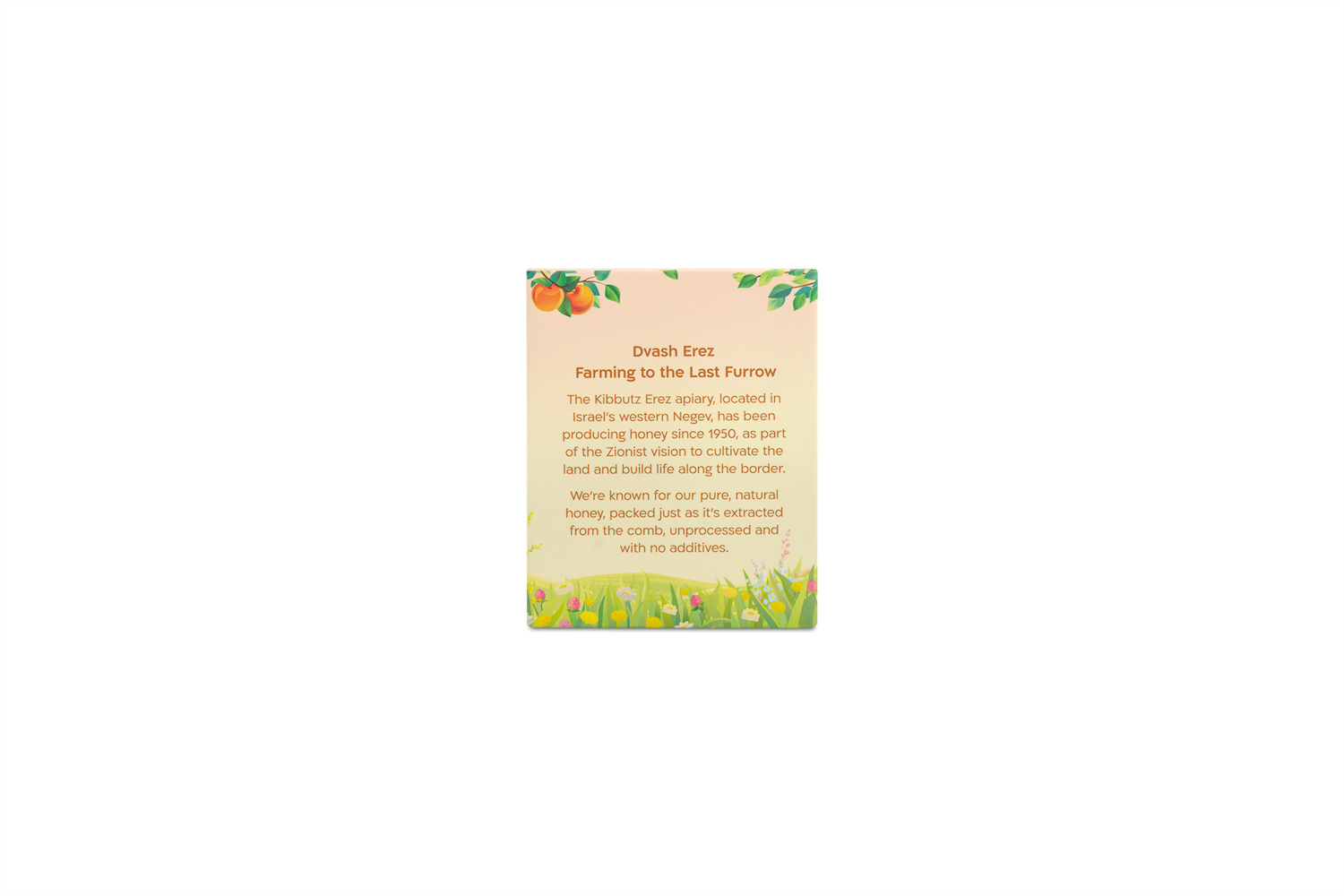
Dvash Erez Apiary operates at Kibbutz Erez, a farming community located a few kilometers from the Gaza border. Established in 1950, the apiary supports the kibbutz through honey production and pollination of nearby crops. Dor Zohar manages the hives together with veteran beekeeper Uri Shtrasberg, overseeing daily care, seasonal hive placement, and colony health under demanding conditions.
After October 7, access to the kibbutz was restricted and agricultural activity paused. When entry was restored, the apiary resumed work and returned the hives to regular management. Beekeeping continues as part of the kibbutz’s agricultural routine, keeping food production active and fields in use.


 Item was added