Your cart
Cart
items
Shopping cart



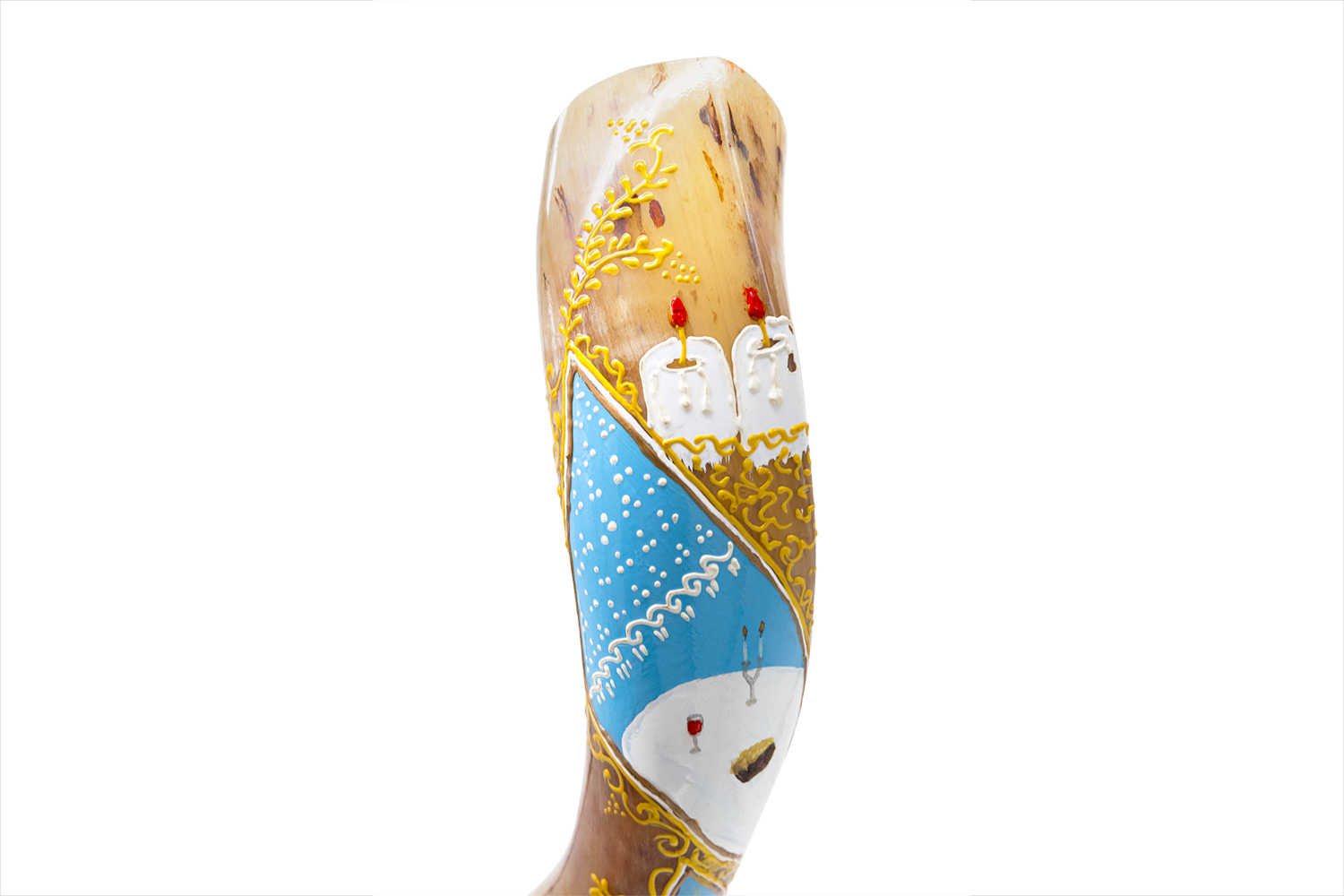


Avi Mishaan’s Yemenite, handpainted kudu horn shofar is a gorgeous example of a 100% kosher shofar handmade in Israel. Israeli artist Sarit Romano has handpainted the shofar with images depicting the six days of creation. This is a unique and beautiful shofar!
According to Jewish tradition, it was a rams horn shofars that the priests carried during the battle of Jericho. “Seven priests shall bear seven trumpets of rams’ horns before the ark.” Joshua 6: 4
Each shofar crafted in Avi Mishaan’s workshop is tested for quality and sound. This high-quality, polished, kosher shofar features a traditional style mouthpiece for easy blowing. It is a classically handcrafted Yemenite shofar that is ideal for any time of year, especially the High Holiday season.
It is a one-of-a-kind shofar, each horn varies slightly in color and finish, and as it is painted by hand, no two are identical.
Avi Mishaan is part of a multigenerational family business established in 1936 to make and sell Judaica. The Mishaan family has a deep connection with the Land of Israel and takes special pride in making products meant to stir the hearts of the people who receive them.
The family’s love for people around the world runs deep, and they are proud to offer everyone a one-of-a-kind, made-in-Israel Judaica that helps deepen their connection with the Land of Israel and strengthen their spiritual practice.
The Mishaans are best known for their shofarot (the plural of shofar), but they also craft mezuzot (the plural of mezuzah) and curate a collection of meaningful jewelry and Judaica. Avi’s jewelry is symbolic as well as beautiful — each piece is designed to connect the wearer to the Land of Israel and awaken a deeper spiritual connection.
For Avi, making shofarot is the work of a lifetime. His grandfather founded the family workshop in 1936, and Avi spent his childhood surrounded by horns at every stage of production. After serving in the Israel Defense Forces and pursuing other paths, he chose to return to the workshop, certain that crafting shofarot was where his own life’s work belonged.
Visitors quickly discover that Avi does far more than shape horns. He teaches the history of the shofar, explains its place throughout the Tanakh, and encourages every visitor to sound one themselves. He often says a shofar should never sit on a shelf waiting for the holidays — its voice belongs in our homes all year, calling us toward reflection, prayer, and a stronger connection with God, our communities, and one another.